
2026 Investment Outlook: Balancing risk and opportunity ahead

As we enter 2026, we are positioned broadly neutral within respective equity ranges across our multi-asset funds. We favour credit over sovereign bonds within our fixed income allocations. From a Eurozone sovereign bond perspective, we prefer periphery issuers over core and are short from a duration perspective versus the wider market. A material overweight position in Gold was reduced the week before Christmas; however, we continue to see the structural supports in Gold in place. Overall, we are marginally overweight across Alternatives as a whole.
2025 review
Last year proved to be a remarkable year for risk assets, most notably equities. The seminal market moment proved to be the 2nd April tariff announcements from US President Donald Trump, which led to one of the most volatile three day periods in market history. Having begun the year strongly due to prospects of tax cuts and deregulation from the new US administration, equity markets experienced bouts of volatility and weakness as the ‘America First’ trade policy began to take form.
The US dollar weakened against key currencies such as the Euro as a result, with Gold being a key beneficiary. Meanwhile, a Conservative victory in the German election preceded a reduction in the budget ‘debt brake’ mechanism. Similar announcements of increased infrastructure and defence spending across the continent saw Eurozone equities outperform their US counterparts.
However, the expectation of increased spending and therefore debt levels led longer dated German government bonds to experience a sharp price decline. Concerns on government deficits and debt levels across developed markets was a persistent theme of bond market price action in 2025.
Equities outlook
Within respective multi-asset funds, our allocation to equities is currently neutral. Equities remain close to all-time highs but have been underpinned by robust earnings, which have been supported by impressive margin and therefore profitability figures from US corporates. From a top-down perspective, fiscal and monetary policy remains supportive whilst the AI narrative has driven growth at an individual security level. Trends are powerful within markets and can persist, but there will likely be bumps along the road.
From a geographical perspective, we have a preference for the Asia Pacific region, are neutral in respect to Japan and Europe, and have a slightly underweight allocation to North America — whilst continuing to note the absolute exposure (75%~) of this region to equities overall. From a sectoral perspective, we have a preference for sectors such as Technology and Industrials and are more cautious towards sectors such as Consumer Staples and Energy.
Strong corporate earnings (particularly from Artifical Intelligence (AI)-related companies), major trade agreements, and rate cuts from the European Central Bank (ECB) and the Federal Reserve helped to fuel the market recovery and a near uninterrupted rally through to the end of the year. However, the end of the year saw investors grappling with concerns over AI-related valuations, a potential Ukraine-Russia peace deal, and the record highs seen in Gold and Silver.
Equity valuations on a global basis are not cheap versus long-term averages. The forward price-earnings (P/E) for the global stock market is approximately 19x which is a premium to historical valuations. It has been evident for some time now that investors are willing to pay a higher multiple for US equities (22.7x P/E) versus other regions. This narrative is supported by heavier weights in Technology and AI related companies coupled with the concept of ‘American exceptionalism’ and more productive ‘animal spirits’.
Fixed income outlook
Within our Eurozone sovereign bond holdings, we prefer periphery issuers over core and are moderately short from a duration perspective versus the wider market. Our fixed income exposure continues to be nearly all euro denominated.
Increased debt issuance and muted economic growth remain headwinds for Eurozone government bonds. We are unlikely to see huge capital gains in the year ahead, but yields are now firmly in positive territory. In the US, concerns in relation to the overall level of government debt, the annual budget deficit, and the sheer amount of interest payments remain present. Overall, on both sides of the Atlantic, shorter duration government bond issuances look more attractive than medium to longer-term offerings.
We continue to favour credit within our fixed income allocations. Eurozone corporate bond returns were positive in 2025 — helped by a backdrop of reasonable economic growth and the ECB rate cutting cycle. AI-related debt issuance is a credible market risk and has been evident in the Credit Default Swap (CDS) levels of some individual companies. Overall, spreads versus risk-free rates remain tight versus historical averages. Within this environment, we maintain core allocations to high quality names rather than chasing higher returns in lower credit quality pockets of the market. There are likely to be opportunities within Europe in the form of short duration carry trades.
|
For the Equity Bulls |
For the Equity Bears |
|
|


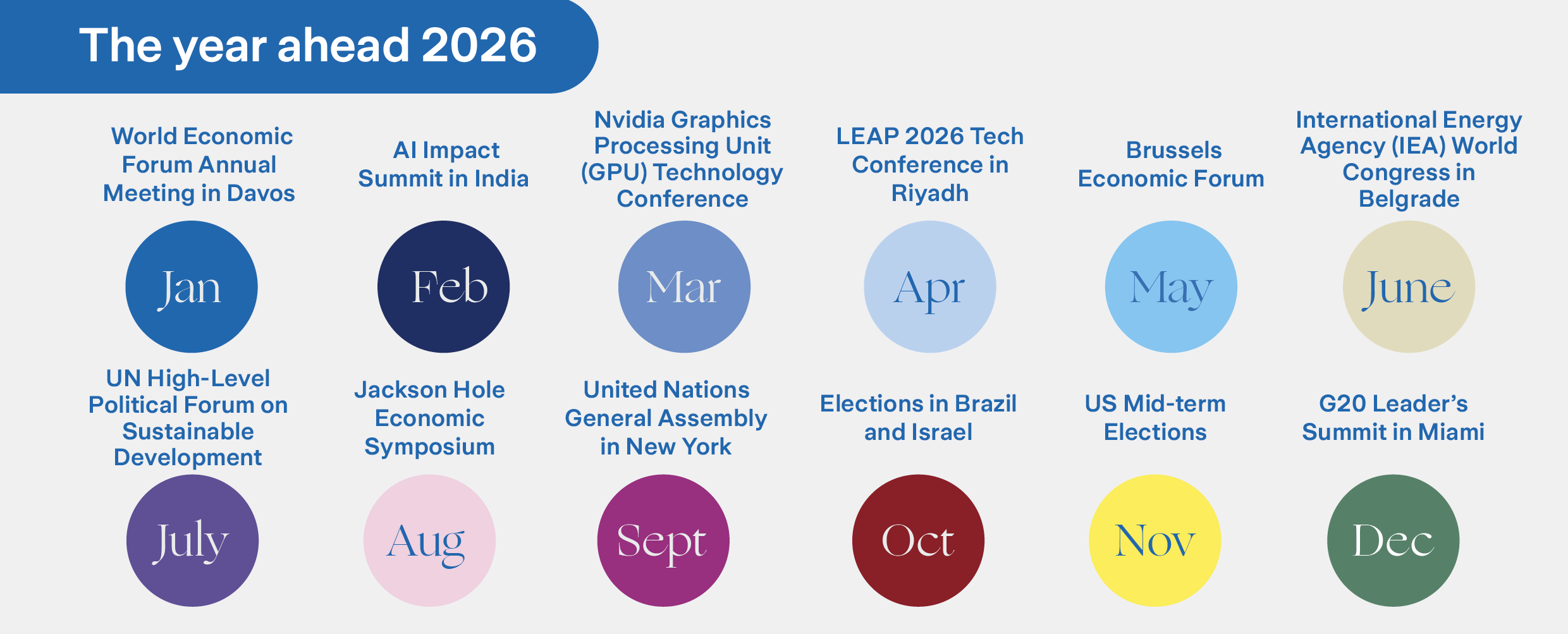
Read the full 2026 Investment Outlook to find out more about Zurich's fund positioning and for a detailed view on opportunities across the global markets.
Notes: Annual management charges (AMC) apply. The fund performance shown is before the full AMC is applied on your policy. Returns are based on offer/offer performance and do not represent the return achieved by individual policies linked to the fund.
Source: Zurich Life as at 02/01/26.
Warning: Past performance is not a reliable guide to future performance.
Warning: Benefits may be affected by changes in currency exchange rates.
Warning: The value of your investment may go down as well as up.
Warning: If you invest in these products you may lose some or all of the money you invest.




.jpg)


.jpg)


 Sending Response, please wait ...