
Preparing for your next chapter: A practical guide to pre retirement planning
We are living longer lives in retirement, meaning we will need larger pension pots to meet our standard of living, as well as bit extra for the fun stuff. Everyone’s situation is different, which is why a one-size-fits-all approach simply doesn’t work. This vodcast takes a closer look at retirement planning.
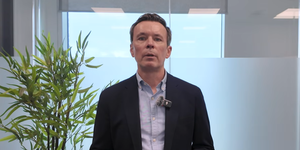
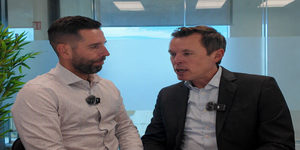
In our latest podcast, recently retired Zurich financial planner, Denis O’Rourke shares what you should consider ahead of retirement, the range of options available in retirement and the importance of advice.
Retirement is not just about stopping work; it is about reshaping your life. The years leading up to retirement are critical for making decisions that will influence your income, lifestyle, and peace of mind for decades.
This article walks you through the key elements of pre‑retirement planning: understanding your income needs, making the most of tax‑free options, and choosing between annuities and Approved Retirement Funds (ARFs). It is designed for people in the final 10–15 years of their working lives who want to move from ‘hoping it will be fine’ to having a clear, confident plan.
Table of contents
1. Why pre‑retirement planning matters
2. Step 1: Understand your future income needs
3. Step 2: Make the most of tax‑free cash
4. Step 3: Annuity vs. ARF: Turning your pot into income
5. Step 4: Managing risk in retirement
6. Step 5: Why professional advice is essential
Why pre‑retirement planning matters
Many people only start thinking seriously about retirement in the last few years of their career. By then, some of the most powerful levers, like increasing contributions or adjusting investment strategy, are harder to pull.
According to Denis O’Rourke: “To get good money out of a pension plan, you have to put good money in.”
Pre‑retirement planning is about:
- Understanding what type of lifestyle you want.
- Knowing what income you will need to support it.
- Making informed choices about how to convert your pension pot into sustainable income.
“It is not just a financial exercise; it is about designing the next chapter of your life,” Denis explains.
Step 1: Understand your future income needs
According to Denis, “you cannot build a realistic retirement plan without first knowing how much you will need to spend each year.”
To do this you must know your ‘burn rate’, he says. “One of the most practical steps you can take is to understand the amount of money you actually spend.”
A simple way to calculate it:
- Review 6–12 months of bank and card statements.
- Separate essential costs (mortgage/rent, utilities, food, insurance, transport).
- Separate discretionary costs (holidays, dining out, hobbies – the ‘piece of cake’ money).
“You need to know what it costs to run your life before you can know what income you’ll need in retirement. This exercise gives you a realistic baseline for your retirement income target.”
Denis also points out that it is important not to forget the State pension. “For many people, the State pension is a key part of their retirement income. However, it usually starts later (for example, at age 66), but you may want or need to retire earlier (say at 60 or 62).
That creates a gap you need to bridge with:
- Your occupational pension.
- Personal pensions.
- Additional Voluntary Contributions (AVCs).
“If you retire before the State pension kicks in, you need a plan for how you’ll fund those in‑between years.”
Step 2: Make the most of tax‑free cash
One of the most attractive features of pensions is the ability to take part of your fund as a tax‑free lump sum at retirement.
So, how much tax‑free cash can you take?
“While the exact rules depend on your specific arrangement and fund size, the broad principle is that you can typically take up to a certain limit (for example, up to €200,000) as a tax‑free lump sum. Amounts above that may be taxed or subject to different rules.
“The tax‑free lump sum is often the biggest single financial decision people make at retirement.”
It is important to understand how taking more or less tax‑free cash will affect the income you can generate from the remaining fund.
Common uses for the tax‑free lump sum include:
- Clearing or reducing debt (e.g. mortgage, loans).
- Building or topping up an emergency fund.
- Funding one‑off goals (home improvements, a special trip).
- Reinvesting part of it in a way that supports long‑term income.
The key is to balance short‑term wants with long‑term security.
Step 3: Annuity vs. ARF: Turning your pot into income
Once you have taken your tax‑free cash, the next major decision is how to convert the remaining fund into income.
In most cases, this comes down to a choice between an annuity or an Approved Retirement Fund (ARF)
An annuity is a contract with a life company where you hand over your pension pot (after tax‑free cash). In return, you receive a guaranteed income for life.
Key characteristics:
- Certainty: You know exactly what income you will receive.
- Simplicity: Once set up, it is straightforward.
- Irreversibility: Once purchased, you generally cannot change your mind.
- Estate impact: The capital is typically not part of your estate (unless you pay extra for certain options).
“With an annuity, you’re swapping your pot for a guaranteed income – but once it’s done, it’s done.”
Annuities can be particularly attractive for those who value security and have a lower tolerance for investment risk.
An ARF allows you to keep your pension fund invested, draw an income from it, within Revenue rules and retain ownership of the underlying capital.
Key characteristics:
- Flexibility: You can vary your withdrawals (subject to minimum drawdown rules).
- Growth potential: The fund remains invested, so it can rise or fall in value.
- Estate planning: Any remaining balance on death can pass to your estate.
“The ARF is popular because of the flexibility surrounding it… you can pass it on.”
ARFs suit people who are comfortable with investment risk, want flexibility in how much they draw and when, and place value on leaving a legacy, if possible.
The table below compares annuity and ARFs:
| Feature | Annuity | ARF |
|
Income |
Guaranteed for life | Variable, depends on withdrawals and markets |
| Investment risk | None (for the retiree) | Carried by the retiree |
| Flexibility | Low | High |
| Estate / Inheritance | Limited (unless options added) | Remaining fund can pass to estate |
| Suitability | Security‑focused, risk‑averse |
Flexible, comfortable with risk |
“There’s no one‑size‑fits‑all answer – it depends on your health, your family situation, and your appetite for risk.”
Many people also consider a blend – for example, using part of the fund to buy an annuity for core expenses, and placing the rest in an ARF for flexibility.
Step 4: Managing risk in retirement
Retirement does not mean the end of investment risk; in some ways, it is the beginning of a new type of risk:
- Longevity risk: Living longer than expected and outliving your money.
- Inflation risk: Rising prices eroding your purchasing power.
- Market risk: Investment values going up and down.
“Retirement is a balancing act between protecting your income today and keeping enough growth potential for tomorrow.”
Practical ways to manage risk include:
- Diversifying your investments.
- Matching secure income (e.g. annuity, State pension) to essential expenses.
- Reviewing your ARF investment strategy regularly.
- Adjusting withdrawals in response to market conditions.
Step 5: Why professional advice is essential
Retirement planning is complex. Tax rules can be intricate, personal circumstances vary widely (health, dependants, other assets) and decisions are often irreversible.
“Retirement is probably the most difficult financial decision somebody has to take. There’s a whole new language that has to be learned, so it is important to get advice.”
A qualified financial adviser can:
- Help you calculate your burn rate and income needs.
- Explain your tax‑free cash options.
- Model different annuity/ARF combinations.
- Build a plan tailored to your goals and risk tolerance.
To summarise the main messages from the discussion:
- Start serious planning 10–15 years before your target retirement date.
- Know your burn rate – what it really costs to run your life.
- Understand how the State pension fits into your overall income plan.
- Use your tax‑free lump sum wisely – balance today’s needs with tomorrow’s security.
- Carefully weigh the pros and cons of annuities vs ARFs – or a mix of both.
- Recognise that retirement is a long journey, not a one‑off event.
- Get professional advice – the decisions you make at retirement can’t easily be undone.
“Your pension is like a snowball – the earlier and more consistently you build it, the more momentum it has when you need it most.”
With thoughtful preparation and the right guidance, you can approach retirement not with anxiety, but with confidence in the next chapter of your life.
The information contained herein is based on Zurich Life’s understanding of current Revenue practice and may change in the future.
This publication has been prepared for general guidance on matters of interest only and does not constitute professional advice. You should not act upon the information contained in this publication without obtaining specific professional advice.
Warning: Past performance is not a reliable guide to future performance.
Warning: Benefits may be affected by changes in currency exchange rates.
Warning: The value of your investment may go down as well as up.
Warning: If you invest in these products you may lose some or all of the money you invest.



.png)




 Sending Response, please wait ...