
Monthly Investment news September 2026

August was a mixed bag for global markets. Stock markets did well for most of the month, thanks to strong earnings and excitement around AI investments. But by the end of August, worries about inflation and interest rates slowed things down.
Bonds took a hit. Yields went up as investors struggled with stubborn inflation, weaker growth signs, and uncertainty about what central banks would do next.
The situation in the Middle East added more complications. This affected energy markets and made safe-haven assets like gold more attractive.
Currencies were also affected. Hopes and doubts about US government spending put pressure on the dollar. Overall, August showed both optimism about growth and innovation and concerns about bigger global risks.
Market activity
We made a series of changes to our investments in August:
- In our managed funds, we added more bonds and shifted towards longer-term bonds.
- For the AAA, Prisma, and Cautiously Managed funds, we sold short-term bonds and bought medium-term ones through the Active Fixed Income Fund.
- Later on, we added more gold to the AAA and Prisma funds.
- We also switched out of short-term government bonds, buying gold and medium-term government bonds instead. This marked one of our first significant moves into longer-term investments in a while.
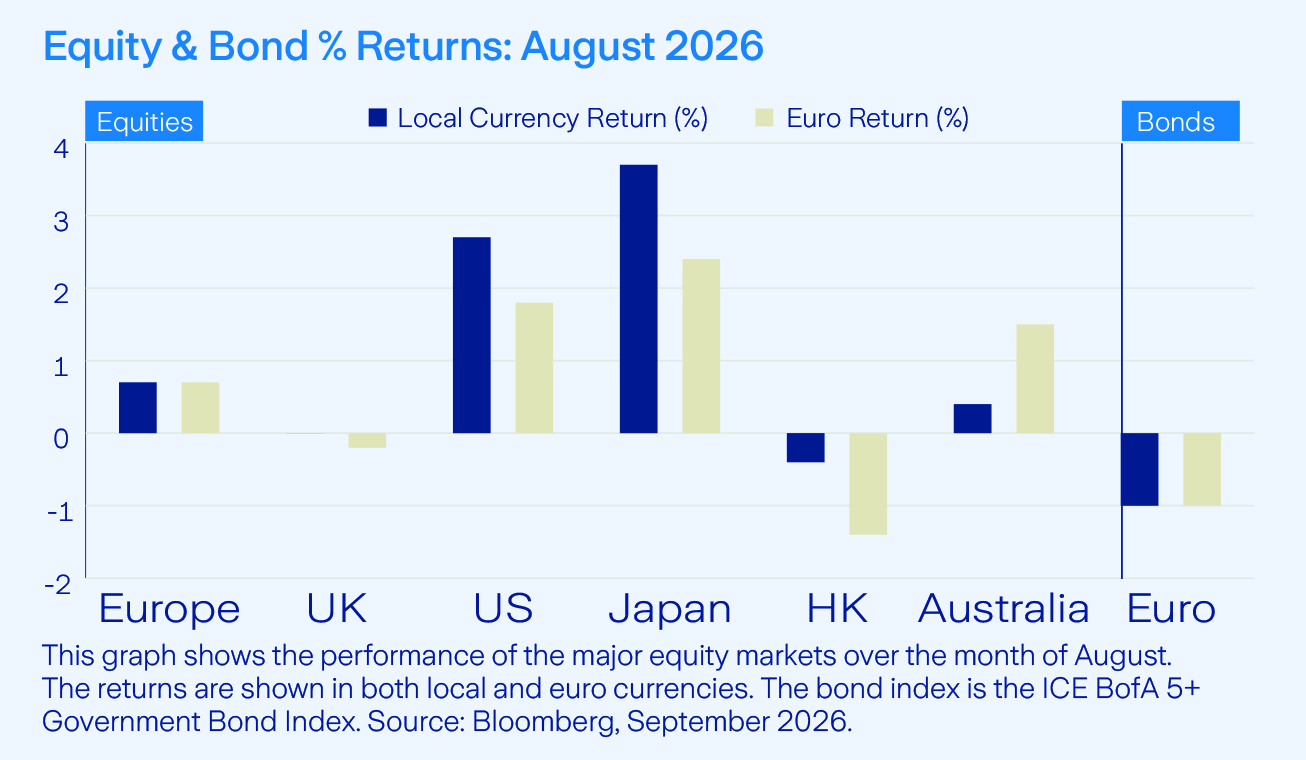
Equity markets
Global stock markets had a good run in August, thanks to strong earnings results, steady economic numbers, and ongoing investments in AI infrastructure. Tech stocks led the charge, with big gains in semiconductors, cloud services, and other AI-related tech.
However, as August ended, optimism faded. Investors grew cautious about inflation and interest rate policies. Rising oil prices, tension in the Middle East, and climbing bond yields raised doubts about how smoothly central banks could shift their policies. Only 5 out of the 11 sectors posted gains. Materials came out on top with an 8.8% gain, while Utilities (-4.0%) and Real Estate (-2.8%) fell behind.
Bonds and interest rates
Global bond markets struggled in August as yields climbed (which lowers bond prices). Sticky inflation, rising energy costs, and slower growth data added to the pressure. Uncertainty over how central banks would respond, especially in the US, made things more difficult.
The Fed decided to hold rates between 3.50% and 3.75% in July. But weak job and retail numbers lowered expectations for quick changes to rates. Meanwhile, Treasury yields went up, with 30-year yields reaching 5.31%, prompting more buybacks. In Europe, inflation stayed at 2.9%, and the ECB kept its tough stance, with another rate hike in September looking likely.
Commodities and currencies
Oil prices stayed high due to ongoing Middle East tension. Late-August conflicts, including threats to key shipping routes, pushed energy prices and bond yields even higher. WTI oil ended the month at $85.76 per barrel, up slightly from $84.76 in July.
Gold saw solid gains, rising 8.8% in euro terms. Its safe-haven status made it more appealing after news broke that the US Treasury planned to increase purchases of long-dated debt, which added pressure on the dollar. The euro also strengthened, closing at $1.1618 at the end of August, up from $1.1527 in July.
Warning: Past performance is not a reliable guide to future performance.
Warning: Benefits may be affected by changes in currency exchange rates.
Warning: The value of your investment may go down as well as up.
Warning: If you invest in these products you may lose some or all of the money you invest.



.jpg)


.jpg)



 Sending Response, please wait ...