
Why investing in 2026 makes sense
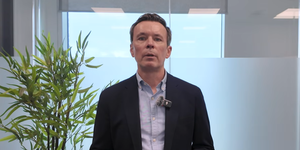
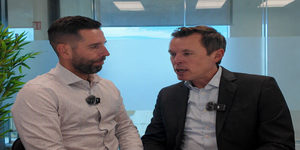
With over €160 billion sitting in Irish bank deposits—often earning minimal interest1 – many are asking if there’s a better way to grow their savings. In this vodcast, Zurich experts Daniel Finucane and Kristen Foran explore the realities of saving and investing in Ireland in 2026 and practical steps for getting started.
The savings landscape in Ireland
Irish households have developed strong saving habits, especially since COVID-19. However, much of this money remains in low-interest accounts, missing out on potential growth. Daniel Finucane, Investment Solutions Analyst at Zurich highlights: “There is around €160 billion sitting on deposit, probably not earning as much interest as it could potentially be1. This raises a crucial question: Is your money really working for you, or is it losing value over time?”
Across the global markets in 2025, growth sectors such as Communication Services and Information Technology had a strong year, driven by the Artificial Intelligence (AI) trade. This was despite five of the Magnificent Seven (Alphabet, Amazon, Apple, Meta, Microsoft, NVIDIA, and Tesla) underperforming the S&P 500.
However, 2025 will likely be best remembered by the market as the year of the tariff. Tensions between the US and its largest trading partners created a fog of uncertainty early in the year. What followed in the subsequent months was a series of tit-for-tat tariff battles, before a swathe of trade agreements reinstated the market’s optimism.
Looking ahead to 2026, risks are, as ever, present within the global economy and the investment markets. Whilst market focus has shifted away from tariff tensions, there is the possibility that they could emerge once more.
Markets are also unresolved on topics including the true impact of AI, its associated impact on equity valuations, and the possibility of a re-emergence of trade tariff tensions and their associated impact on economic activity.
Overall, a careful, considered approach whilst maintaining perspective will be key for investors throughout 2026. There is a plethora of structural forces vying for investor attention, which could result into both positive and negative developments across risk assets.
Opportunities will inevitably present themselves to investors. If you want to delve deeper into the markets, Zurich’s yearly investment outlook has lots of information on trends and opportunities for investors.
When it comes to savings, Irish households saved 14.8%, or €1 in €7, of their disposable income in Q3 2025, which was above the 2023 and 2024 average2.
The Central Bank of Ireland also finds that the ageing population has shifted its savings goals with a greater focus on accumulating wealth for retirement. Younger households have also increased their savings, citing housing as a reason3.
In this article we will look at benefits of investing versus saving key considerations before investing and the advantages of investing with Zurich.
Inflation and its impact on savings
“Inflation reduces the purchasing power of savings, meaning that the same amount of money buys less over time,” Daniel explains. “Money left in a bank account may not keep up, resulting in a loss whereas investing in assets like equities or commodities can help your money outpace inflation and preserve its value.”
What is investing?
Investing means putting your money into assets such as equities, bonds, property, or commodities with the expectation that it will grow over time. “The goal is to achieve higher returns than you’d get from a standard savings account,” Daniel says.
Why invest instead of just saving?
Investing offers several advantages over simply saving:
- Beating inflation: Investments can grow faster than inflation, protecting your purchasing power. “By investing your money, you really give yourself the opportunity to outpace inflation and grow above it,” Daniel emphasises.
- Higher potential returns: “Equities, for example, have historically outperformed savings accounts – global equities rose over 100% in the last five years, compared to 20% inflation.”
- Diversification: “By spreading your money across different assets, you reduce risk and smooth out returns.”
- Compounding growth: “Returns generate further returns over time, especially when you start early,” Daniel explains.
- Tailored to You: “Investment products can be matched to your risk tolerance and goals.”
- Professional management: “Multi-asset funds and managed portfolios make investing accessible, even for beginners.”
Diversification: Spreading risk
Diversification means not putting all your eggs in one basket. “By investing across different assets, regions, and sectors, you reduce the risk of big losses and help smooth out returns,” Daniel explains.
“Diversification can lower risk without proportionally reducing returns, improving your return-to-risk ratio. Multi-asset funds offer built-in diversification, managed by professionals.”
Understanding volatility
Volatility measures how much the price of an asset can change over time. While highly volatile assets can swing widely (and may offer higher long-term returns), less volatile assets are steadier but usually yield lower returns. Daniel puts it simply: “Short-term volatility is less important for long-term investors, especially when holding a diversified portfolio. Staying invested through ups and downs is key for growth”. He also referenced 2025 as a year with significant market movement due to events like tariff implementations in America, illustrating real-world volatility.
Key considerations before you invest
Before you start investing, there are a few essential steps to take:
- Emergency fund: Kristin Foran stresses: “It’s important to have an emergency or rainy-day fund of three to six months income in an accessible bank account before investing. This ensures you have funds available for unexpected events.”
- Time horizon: “Investments should be for at least five years, ideally longer, to allow time to ride out market ups and downs and achieve growth,” Kristin says.
- Risk tolerance: Know your appetite to risk, use profiling tools or talk to an advisor. “Investments should match your comfort with risk and your objectives,” Kristin says.
- Financial planning: “Seek advice to define your goals and select suitable products; there’s no one-size-fits-all solution.”
- Multiple goals: “Different goals may require different investment approaches,” she adds.
Zurich’s multi-asset approach: Prisma funds
Zurich’s Prisma fund range are designed to match different risk tolerances and objectives. These funds are diversified across equities, bonds, property, commodities, and cash, with allocations adjusted by Zurich’s award-winning in-house team4.
“The Prisma funds are designed to simplify investing for customers by offering ready-made, diversified portfolios that align with individual risk profiles, making it easier for investors to get started and stay invested,” Daniel explains.
Talk to a financial advisor Get a free consultation from Zurich
Active versus passive fund management
Zurich’s Prisma funds are actively managed, meaning the Zurich investment team based in Dublin regularly adjusts holdings to optimise performance and manage risk, rather than just tracking a market index.
“Active fund management, as practiced by Zurich for the Prisma funds, involves an in-house investment team making ongoing decisions to adjust asset allocations based on current market conditions and new information, aiming to optimise performance and manage risk,” Daniel explains. “This approach aims to take advantage of opportunities and respond to risks as market conditions change.”
Advantages of investing with Zurich
- Diversified, multi-asset funds tailored to different risk profiles.
- Exposure to hundreds of global stocks without picking individual shares.
- Simple online application and performance tracking.
- Tax on returns is handled within the fund meaning there are no annual returns to file.
- Professional advisors help tailor solutions to your needs.
Kristin adds: “Advisors help tailor investment solutions to individual needs, ensuring the right product and risk profile for each customer.”
When is the right time to invest?
The best time to invest is as early as possible. Time in the market is the most important factor for long-term growth. “The best time to invest is now,” Daniel emphasises. “Waiting for certainty is rarely rewarded and starting now allows your investments to benefit from compounding over time, especially for long-term goals like retirement.”
Key takeaways
- Inflation erodes savings, making investing essential for preserving and growing your wealth.
- Diversification can reduce risk.
- Multi-asset funds like Zurich’s Prisma range offer simple, diversified options for all risk profiles.
- Maintain an emergency fund before investing and only invest money you won’t need for at least five to seven years.
- Assess your risk tolerance and seek professional advice.
- The most important factor for investment success is starting early and staying invested.
“Seek professional financial advice to define objectives, assess risk, and choose suitable products. The best time to invest is now; time in the market is the key driver of long-term growth,” Kristen concludes.
Start by securing your emergency fund, then consider investing for your long-term goals. Use diversified, risk-appropriate options like multi-asset funds, and don’t hesitate to seek professional advice. Remember: the earlier you start, the more your money can grow over time. Daniel concludes: “The most important factor for investment success is starting early and staying invested over time.”
Talk to a financial advisor Get a free consultation from Zurich
Sources:
1Central Bank of Ireland, July 2025
2Central Statistics Office: Household savings, Q3 2025
3Central Bank of Ireland, Household savings 2025
4Investment Excellence Award, Brokers Ireland, 2014 - 2025. No awards held in 2020. Pension Provider Excellence Award, Brokers Ireland, 2021 - 2025. Fund Management Company of the Year 2025 Award, Business and Finance Financial Services Awards. Pensions and Life Assurance Company of the Year, InBUSINESS Recognition Awards, 2025.
The tax and legislative information contained herein is based on Zurich Life’s understanding of current practice and may change in the future.
Warning: Past performance is not a reliable guide to future performance.
Warning: Benefits may be affected by changes in currency exchange rates.
Warning: The value of your investment may go down as well as up.
Warning: If you invest in these products you may lose some or all of the money you invest.



Related articles
.png)


Filter by category
Follow us on


 Sending Response, please wait ...