
AI enthusiasm meets the reality of higher interest rates
September was a mixed bag for investors. Rising bond yields, stubborn inflation, and pricey energy made things tough for the markets. But on the flip side, excitement around artificial intelligence helped keep tech stocks strong.

September saw bond markets steal the spotlight. Government bond yields reached their highest levels in decades. Why? Because energy prices surged again, inflation stayed stubbornly high, and there was a lot more debt being issued. On top of that, central banks like the Federal Reserve and the European Central Bank raised interest rates in their effort to tighten monetary policy.
Shares fared a bit better, but the headlines don’t tell the full story. Most of the gain came from AI-related tech stocks, while many other areas struggled.
Tensions in the Middle East added to the mix too, with renewed attacks on shipping and energy infrastructure sending oil prices even higher. This, in turn, raised concerns about inflation.
Currency markets moved in line with these shifts. Higher US interest rates strengthened the dollar while weakening the euro.
In summary, September was a month when optimism about AI growth was up against the rising cost of borrowing money.
Market activity
In September, we made some changes to our investment approach.
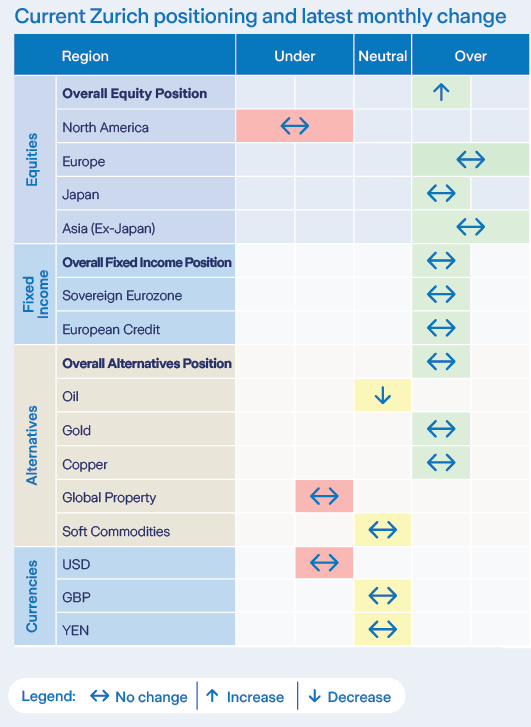
- We reduced the AAA Fund’s exposure to oil and invested more in gold. This was followed by similar changes in the Prisma funds. Oil had seen some gains due to unrest in the Middle East, while gold had dipped from the highs of January. However, gold remains supported by key factors like central bank purchases.
- We used some cash in the Dynamic Managed Fund to increase investments in equities. This adjustment brought the equity content in the AAA Fund and Prisma range above their midpoint levels.
- Finally, we increased exposure to Long Bonds in both the AAA Fund and Prisma range.
Equity markets
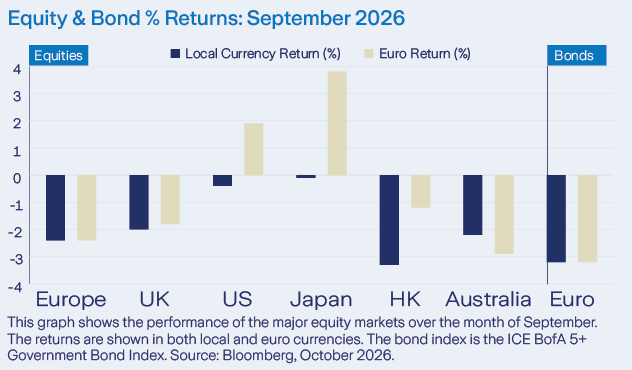
Global stock markets had a tricky September. So, what caused this?
- Rising bond yields.
- Higher oil prices.
- Central banks taking a stricter approach.
European shares had enjoyed five months of gains, but that streak ended last month. Stocks that are sensitive to interest rate changes, as well as smaller companies, saw some of the biggest losses.
One bright spot was AI-related technology. Demand for semiconductors and cloud infrastructure stayed strong, which kept large US tech companies steady. This happened even though there was some mid-month uncertainty when big AI developers called for slowing down development.
Overall, the market wasn't doing well. Only 4 of the 11 sectors finished higher. Leading the way were: Information technology, up 7.1% and communication services, up 6.2%.
On the other hand, the worst performers were: Materials, down 4.9%. consumer discretionary, down 3.7%.
Bonds and interest rates
September saw a bigger dip in global bond markets, with yields going up and prices dropping. Why? Rising energy costs, ongoing inflation, more government borrowing, and stronger-than-expected economic data didn’t help.
Central banks added pressure. The US Federal Reserve raised interest rates to between 3.75% and 4.00%, the first increase since 2023. Markets think they’ll go up again by the end of the year. Treasury yields hit levels not seen in decades – 30-year yields finished the month at 5.64%. Even bigger buybacks didn’t calm investors.
In Europe, inflation climbed to 3.2%. The European Central Bank (ECB) also raised its deposit rate to 2.50%, making it their second hike this year.
Commodities & Currencies
Oil prices went up as tensions grew in the Middle East. Attacks on tankers in the Strait of Hormuz and the temporary closure of an important Saudi pipeline pushed prices briefly over $105. But once the pipeline reopened, prices eased back. At the end of the month, WTI closed at $90.42 a barrel, higher than August's $85.76.
Gold lost some of its appeal as a safe haven, dropping around 4% in euro terms. This was due to rising bond yields and a stronger dollar, which outweighed concerns about global conflicts.
Meanwhile, the euro weakened. It closed the month at $1.1330, down from $1.1618 at the end of August.
Warning: Past performance is not a reliable guide to future performance.
Warning: Benefits may be affected by changes in currency exchange rates.
Warning: The value of your investment may go down as well as up.
Warning: If you invest in these funds you may lose some or all of the money you invest.









 Sending Response, please wait ...